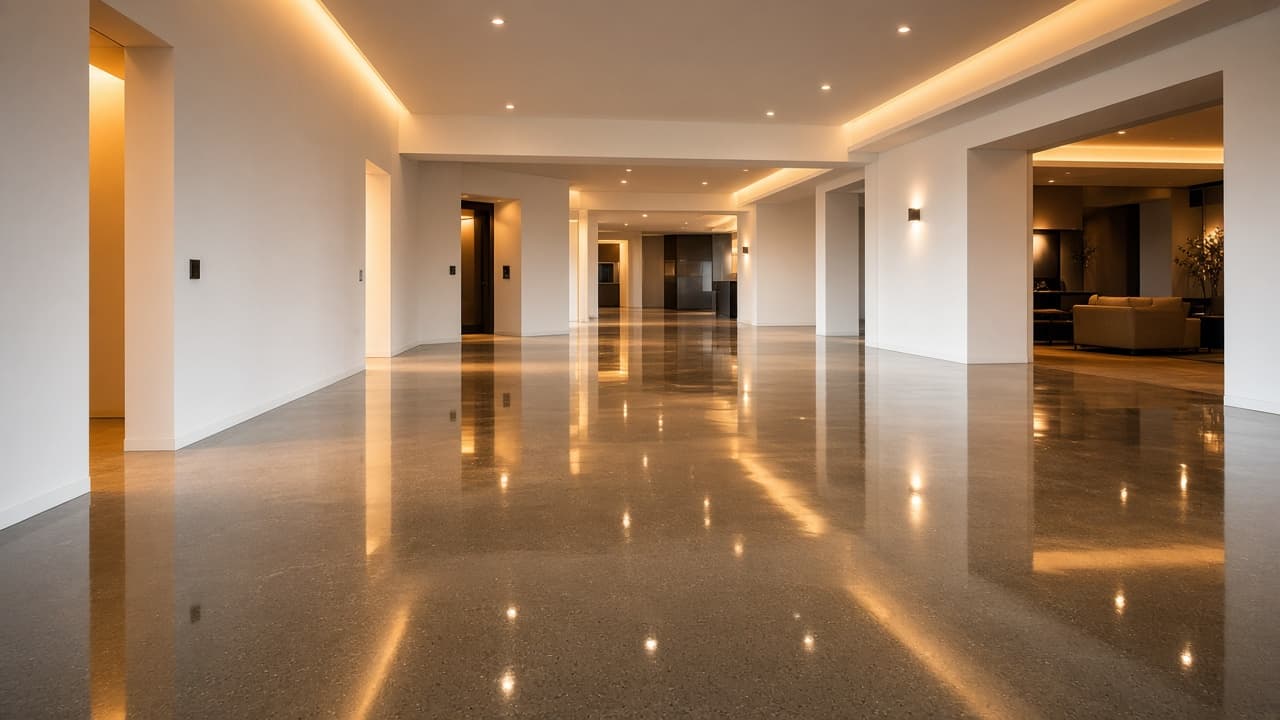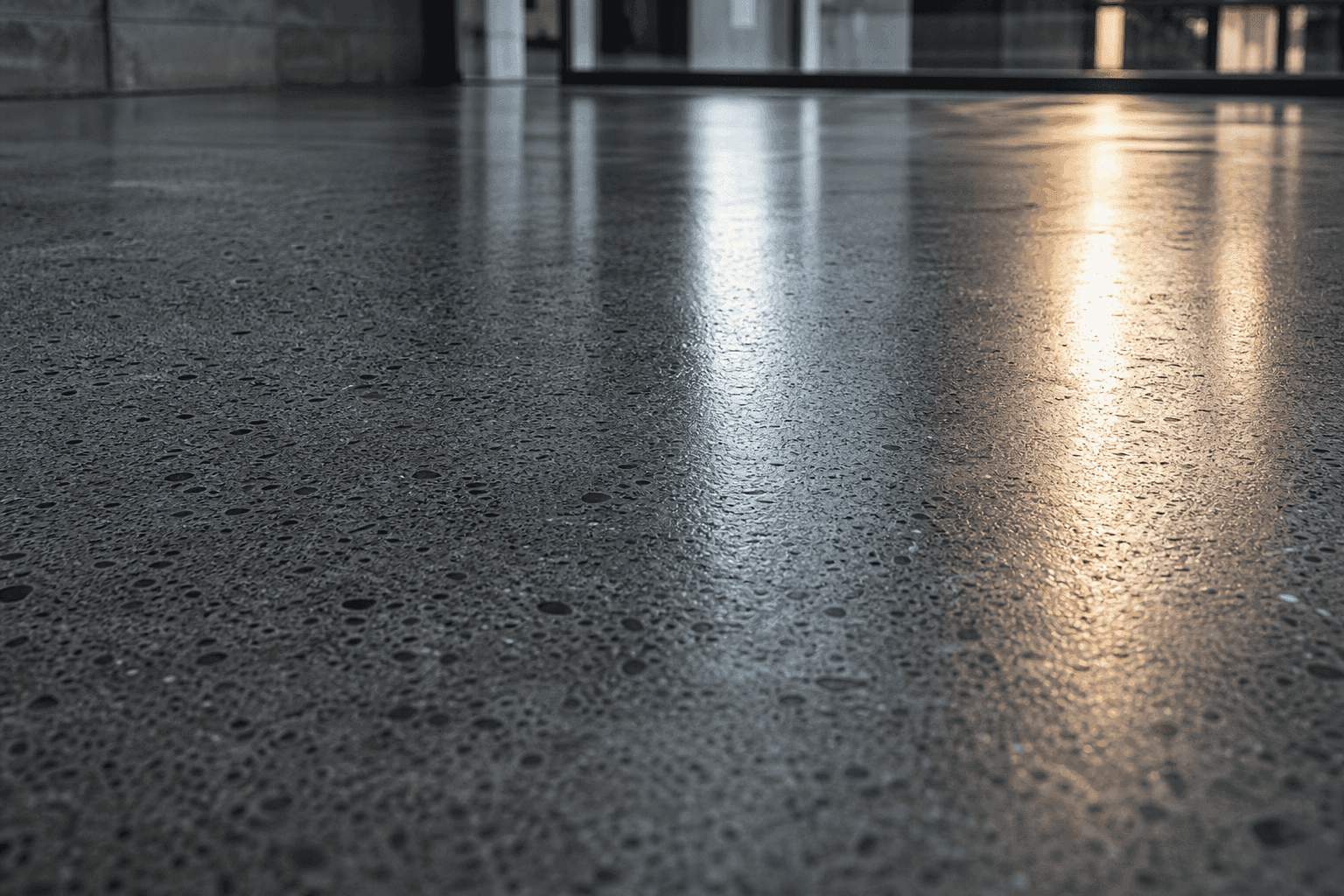
One of the most common questions we get is some version of 'how much per square foot?' It's a reasonable starting point, but it's also where a lot of homeowners get misled — because a square-footage price without context is almost meaningless for a concrete floor job. Two identical-sized rooms can be genuinely different jobs. This guide explains what actually drives cost so you can ask better questions, evaluate quotes fairly, and avoid the contractors who give a low per-square-foot number to win the job and then find reasons to add charges.
The biggest cost driver: slab condition
The condition your concrete is in when we arrive is the single biggest variable in the cost of a floor job. A clean, flat, crack-free slab that's never been coated can go straight to grinding and polishing. A slab with old epoxy paint that needs removal, crack repair across 30 linear feet, significant pitting from salt damage, and low spots that need levelling is a fundamentally different job — and it will cost more, because there's more work involved before we even start building the finish.
This is why we always look at the floor before quoting. A contractor who gives you a square-foot price over the phone without seeing the slab is either going to add charges once they're on-site, or they're cutting corners on prep. Neither is good.
What each stage of work involves
Grinding and prep
The grinding stage is labour and equipment intensive. Our grinding machines use industrial diamond tooling that wears and must be replaced — coarser concrete or more contaminated slabs eat diamonds faster, which adds cost. The size of the space matters here too: grinding a 400-square-foot garage takes proportionally more passes and setup than a 2000-square-foot warehouse floor.
Repairs
Crack routing, spall repair, and patching are charged separately from the main floor work because they vary so much between jobs. A floor that needs significant repair before it can be finished correctly will take more time and materials. We scope this during the quote visit so you know what's included.
Finish level
A matte 200-grit polish requires fewer passes and less time than a 3000-grit mirror finish. Each grit step is additional time and fresh tooling. For the typical residential job, the difference between a satin and a high-gloss finish is meaningful. For a large commercial floor, it's significant.
The coating or sealer system
Products vary in cost and quality. A commercial-grade polyaspartic costs more than a basic residential sealer, but it performs differently over years of use. A full broadcast flake system with a polyaspartic top coat uses more material than a simple penetrating sealer on a polished floor. The product spec is part of the job spec — it shouldn't be swapped out after you've agreed to a quote.
Why the cheapest quote often costs more in the long run
We see this often enough to talk about it directly. A contractor who quotes very low is usually winning by cutting prep. They might skip the coarser grinding passes to save diamond wear. They might use a thinner material spec. They might leave cracks unfilled because filling them adds time. The floor looks fine for the first year and then starts failing: coatings peel at the edges, cracks telegraph through, high-traffic areas dull quickly. At that point you're paying for a full redo.
We're not the cheapest quote in Kamloops. We're also not the most expensive. What we are is transparent: the scope we quote is the scope we do. If we find something unexpected under the old coating, we tell you before we proceed, not after.
Questions to ask any contractor before you book
- Will you come out to see the floor before quoting? (If not, be cautious.)
- Is crack and spall repair included, or quoted separately?
- What grit sequence do you run for a polish at this finish level?
- What densifier and sealer products are you using, and can you provide a spec sheet?
- Do you grind mechanically or acid-etch for coating prep?
- What does the warranty cover and for how long?
How to make your project more cost-effective
- Clear the space before we arrive. Labour time moving furniture or equipment comes off the floor work.
- Deal with drainage or moisture issues before calling us. A moisture-compromised slab may need remediation before coating.
- Combine rooms in a single visit. If you're doing a garage and a basement, doing them together is more efficient than two separate mobilisations.
- Choose the right finish for the use. A high-gloss finish in a high-traffic area needs more maintenance — a satin finish is often the smarter choice for a busy household.
A free quote is the only honest way to price a concrete floor job. We'll come out, look at your slab, scope the work properly, and give you a clear written price. No surprises after we start. Give us a call or reach out through the contact page.