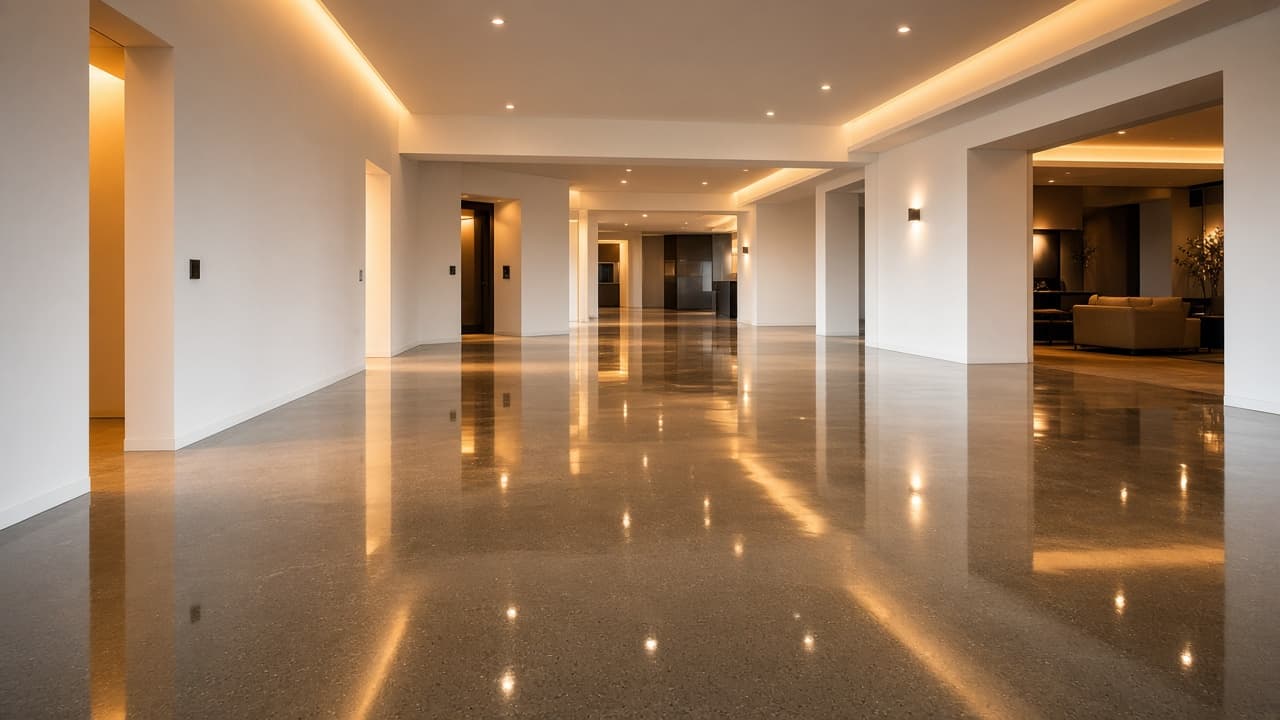
Polished concrete has gone from a warehouse staple to one of the most popular floor choices for Kamloops homes and businesses. It looks sharp, it's practically maintenance-free, and it comes from the slab you already have — no new flooring going on top. But there's a lot of noise about it online, and a lot of it doesn't match how floors actually work in our climate. This guide covers everything from what the process really involves to how to maintain a polished floor through a Kamloops winter.
What polished concrete actually is
Polished concrete isn't a coating or a covering. It's your existing slab, mechanically refined. We use industrial diamond tooling to grind the surface progressively smoother, working through coarser and finer grits until the concrete itself starts to shine. Then a chemical densifier hardens the surface from within, and a sealer locks out moisture and stains. The result is a floor that reflects light, resists wear, and is made entirely from the concrete that was already there.
This matters because there's nothing to delaminate, peel, or wear through. Coatings sit on top of the slab and can eventually fail. Polished concrete is the slab, refined — it fails only when the concrete itself fails, which on a well-prepared slab almost never happens.
The grinding and polishing process, step by step
Understanding the process helps you evaluate quotes and spot shortcuts. A proper polish takes time and multiple passes. Here's what it looks like from start to finish.
- 1Inspection and assessment. We check the slab for moisture, cracks, surface contamination, and how hard the concrete is. These factors determine which diamonds we start with and what repairs are needed.
- 2Prep and repair. Cracks get routed and filled, pits and spalls get patched, and old coatings or adhesives get ground off. Skipping this step shows in the finished floor.
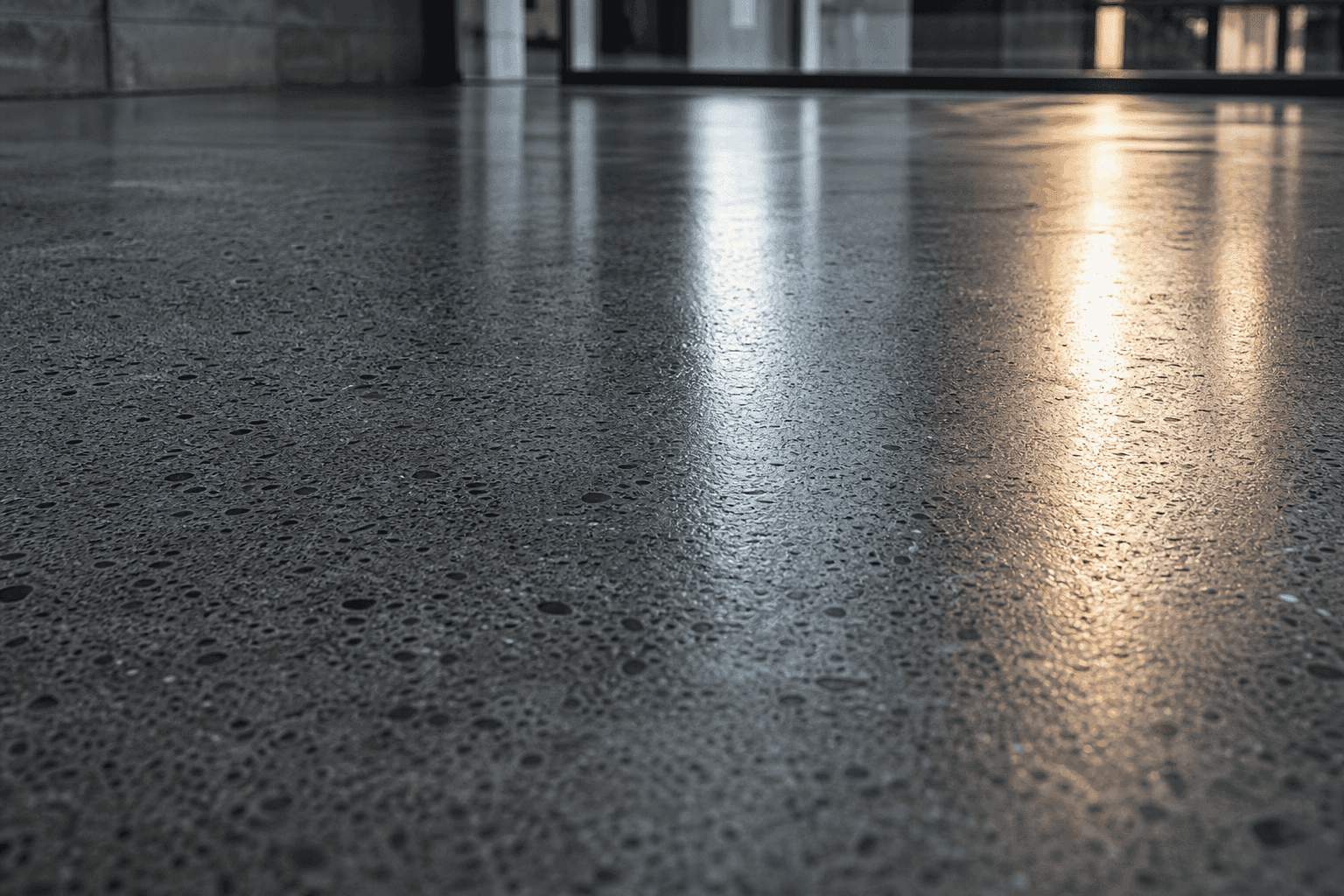
- 3Coarse grind. Metal-bonded diamonds flatten the surface, remove the cream layer, and expose fresh aggregate. This stage determines the final aggregate exposure: cream (no aggregate showing), salt-and-pepper (small stones barely visible), or full aggregate (stones fully exposed and polished).
- 4Progressive honing. We work through finer resin-bonded diamonds, typically 50, 100, 200, and 400 grit. Each pass removes the scratches from the last.
- 5Densifier application. A silicate-based densifier soaks in and reacts with the calcium hydroxide in the concrete to form a harder compound. The floor gets tougher at the molecular level.
- 6Final polish. 800, 1500, and sometimes 3000-grit pads build the shine to your chosen level: matte, satin, semi-gloss, or high-gloss.
- 7Guard and seal. A penetrating guard sealer repels water, oil, and stains without leaving a film that can peel.
Gloss levels: which one is right for your space
Gloss level is one of the first decisions to make, and it affects both how the floor looks and how it performs. Here's how to think about it.
- Matte (200-grit finish). Clean, industrial, minimal reflection. Good for commercial spaces that want a refined look without visual noise. Hides scratches and scuffs best.
- Satin (400-grit). The middle ground most homeowners land on. Soft sheen, warm feel, clear reflection without the mirror effect. Works well in living rooms and open-plan spaces.
- Semi-gloss (800-grit). Noticeable shine, good light reflection, pops nicely in modern kitchens and showrooms. Requires slightly more upkeep to keep marks off it.
- High-gloss (1500–3000-grit). Mirror-like, dramatic, best for commercial showrooms or design-forward homes. Shows dust and footprints more readily; plan for frequent damp mopping.
Aggregate exposure: cream, salt-and-pepper, or full
This is what most people don't know to ask about. How deep we grind determines what you see in the finished floor. A shallow grind leaves the cement paste layer mostly intact — smooth and uniform, called a 'cream' finish. A medium grind exposes the small pebbles and sand in the mix ('salt-and-pepper'). A deep grind fully reveals the large aggregate. Each has a different character. Most Kamloops residential jobs land at salt-and-pepper because it's forgiving of slab variations and looks great across a range of styles.
Why Kamloops is a good climate for polished concrete
Interior BC has some things going for it when it comes to polished concrete. Our low humidity means sealed concrete doesn't deal with as much ambient moisture as coastal homes. Our sunny summers mean great natural light to show off a polished slab. And the in-floor hydronic heating that's become common in newer builds around Juniper Ridge and Sun Rivers pairs perfectly with concrete, which holds and radiates heat better than almost any other floor material.
The challenge is our winters. Road salt tracked in from the driveway, freeze-thaw at the garage threshold, and dusty dry air that makes bare concrete worse without sealing. A properly sealed polished floor handles all of this. The sealer locks out the salt water, the densified surface resists the abrasion, and the smooth finish wipes clean in a swipe.
What polished concrete is not good for
It's worth being straight about the limits. Polished concrete is hard — which is great for durability, but means dropped items hit a hard surface (glass and ceramic will break). It's also cold underfoot without in-floor heat, which is worth considering for basements and bedroom floors where bare feet matter. It doesn't muffle sound the way carpet does, so open-plan spaces may benefit from area rugs to manage acoustics. None of these are dealbreakers for most spaces, but they're worth thinking about.
Maintenance: what polished concrete actually needs
This is where polished concrete wins compared to almost every other floor. Here's the full maintenance routine.
- Daily: dry dust-mop to pick up grit and sand before it gets ground into the surface. This is the most important habit.
- Weekly or as needed: damp mop with a pH-neutral cleaner diluted in water. Don't use vinegar, bleach, or ammonia — they degrade the sealer over time.
- Spills: wipe up promptly. The sealer gives you time but isn't impenetrable forever. Oil and red wine left overnight will stain.
- Every few years: re-apply a maintenance coat of guard sealer. This is a quick job and restores the original protection level.
- Every 5-10 years: a light re-burnish with a high-speed floor buffer brings back the gloss if it has dulled from traffic.
Is your slab a good candidate?
Most slabs in Kamloops can be polished. Older slabs in Brocklehurst and the North Shore that have seen decades of use often surprise people — once the surface contamination is ground off, there's solid concrete underneath. The things that complicate polishing are active moisture intrusion (more of a concern in basements), very weak or contaminated concrete from poor original mix design, or existing damage that's too deep to grind out. We assess all of this on a free quote visit and tell you straight what we find.
How to get a quote and what to expect
A good concrete polishing quote involves someone actually looking at your slab, not pricing it over the phone by square footage alone. The condition of the concrete, what's on it, how much repair is needed, and the finish you want all affect the job significantly. We come out, assess, and give you a written quote at no charge. We cover all of Kamloops including Aberdeen, Sahali, Brocklehurst, and the surrounding area. Call us or fill out the form on the contact page to get started.