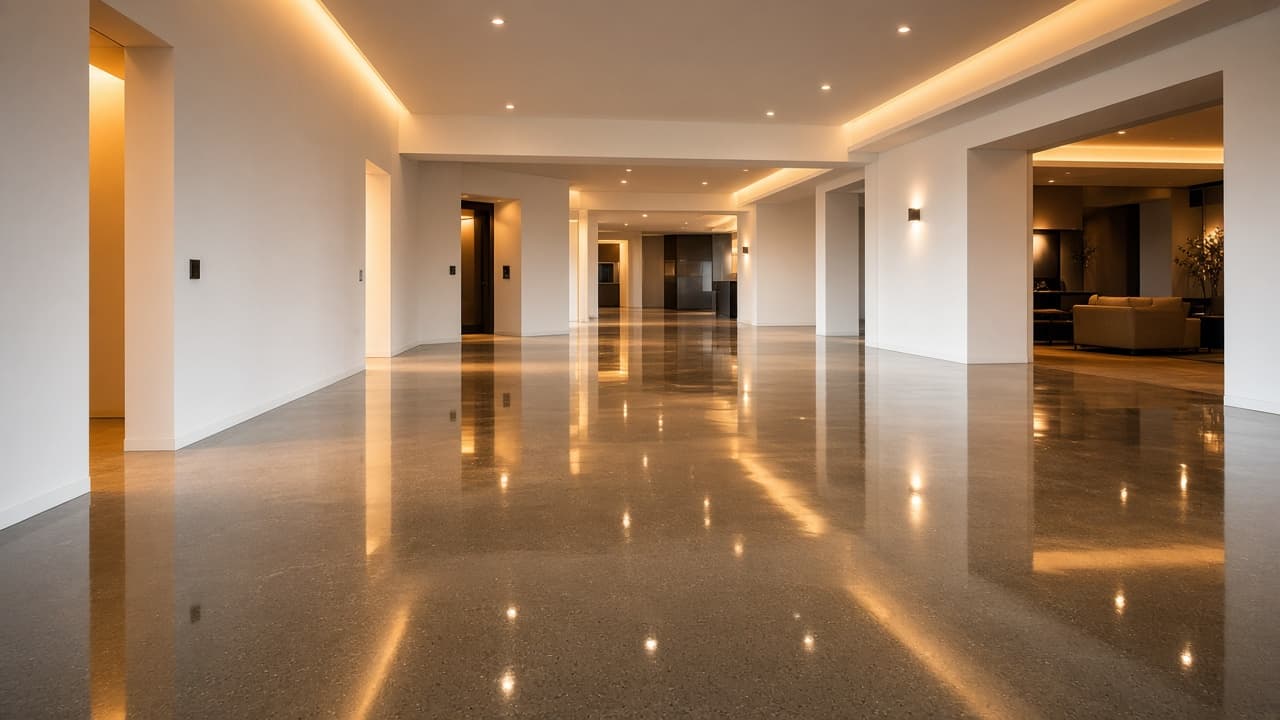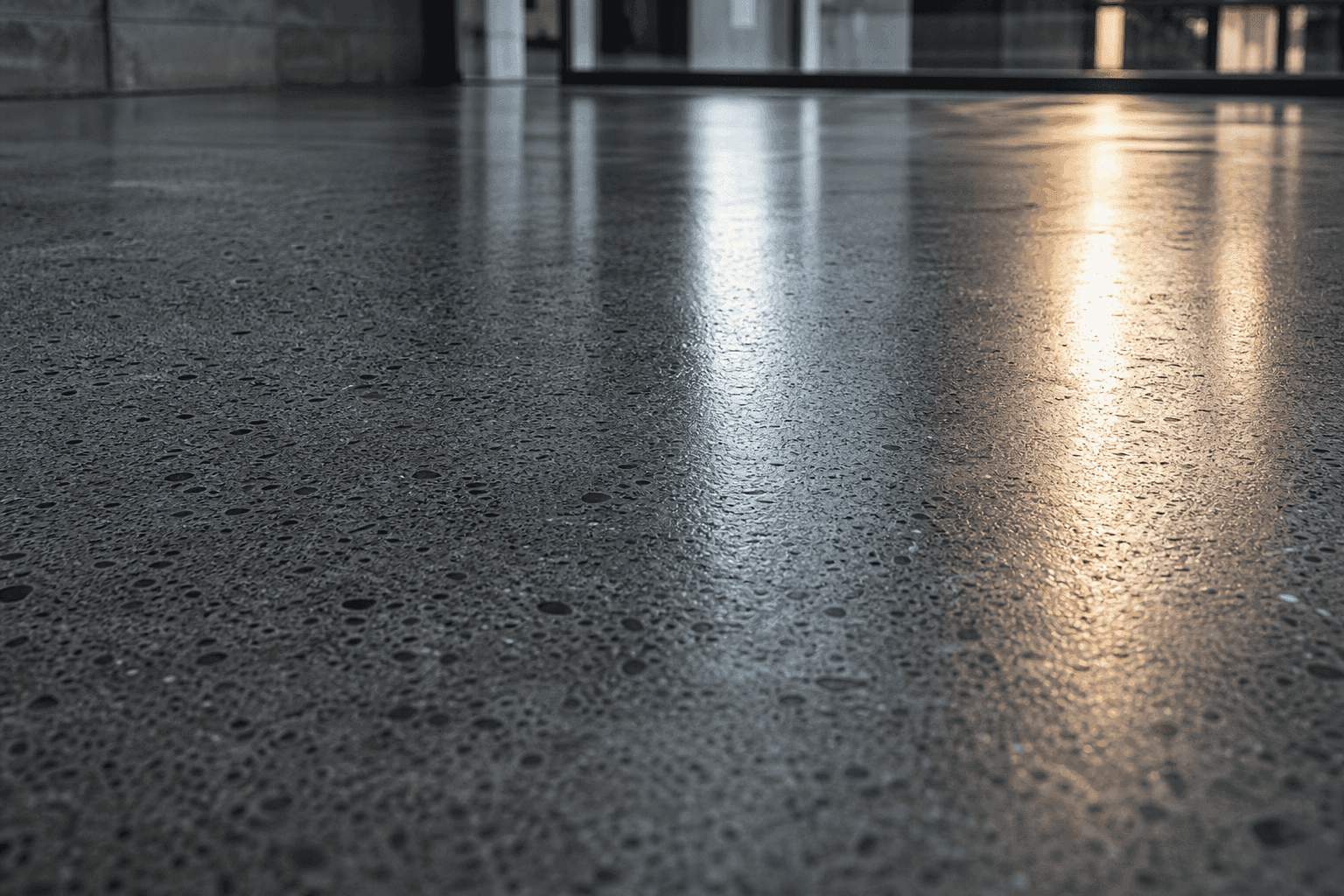
A lot of Kamloops floors aren't failing because the concrete is bad. They're failing because the surface is. Old adhesive, peeling paint, trip lips between pours, tire marks ground into a garage slab, or a coating that never bonded right. Concrete grinding and resurfacing fix those problems without tearing out the floor. This guide covers when grinding is enough, when you need a resurfacer on top, and what to expect if you're dealing with a worn slab in the Thompson Valley.
What concrete grinding actually does
Diamond grinding uses industrial machines with diamond-impregnated tooling to cut away the top layer of concrete. It's mechanical, not chemical. We remove coatings, flatten high spots, open the surface for a new finish, and expose clean concrete that can bond to whatever comes next: polish, epoxy, polyaspartic, or a resurfacing overlay.
Grinding is also the foundation of every good floor job we do. Whether the end goal is a high-gloss polished concrete floor or a tough garage floor coating, the grind decides how flat, clean, and bond-ready the slab is. Skip it or rush it, and the finish fails early.
Signs your Kamloops slab needs grinding or resurfacing
- Peeling paint, epoxy, or sealer that won't stick no matter how many times you recoat.
- Uneven spots, ridges, or trip hazards between old pours or patches.
- Adhesive left over from old tile, vinyl, or carpet that makes every new finish look rough.
- A garage floor with deep tire marks, oil stains that soak through coatings, or a surface that feels chalky and soft.
- A basement or shop floor that's dusty, soft, and sheds powder every time you sweep.
- Height transitions that don't meet cleanly at doorways, making floors feel unfinished.
If two or more of those sound familiar, grinding is usually step one. Resurfacing comes in when the slab is sound underneath but too damaged or uneven for a simple grind-and-finish.
Grinding vs resurfacing: which one you need
Grinding alone
Grinding alone is enough when the slab is structurally sound and you mainly need to clean, flatten, or profile it. Think removing an old coating, knocking down a ridge, or opening the surface before densifying and polishing. The concrete you already have becomes the finished floor, just refined.
Grinding plus resurfacing
Resurfacing means we grind, repair, then apply a cementitious overlay or polymer-modified topping that rebuilds a new wear surface. That's the move when you've got widespread pitting, shallow spalls, old patches that don't match, or a slab that's too rough and inconsistent for a polish or coating to look right. The overlay becomes the new canvas. You still keep the original slab underneath.
Resurfacing is often the honest alternative to demolition. Tearing out and repouring concrete in Kamloops means downtime, disposal, and a new cure schedule. A properly bonded overlay can give you a flat, durable surface in a fraction of that disruption when the existing slab is still sound.
How the process works on a real job
- 1Assessment. We check moisture, hardness, cracks, previous coatings, and how much material needs to come off. That decides the tooling and whether an overlay is needed.
- 2Surface prep and grinding. Dust-controlled diamond grinding removes contaminants and profiles the slab. We chase soft spots and old coatings until we hit sound concrete.
- 3Repairs. Cracks get filled, spalls get patched, and joint edges get cleaned up so the new surface doesn't telegraph every old flaw.
- 4Resurfacer or densifier, depending on the plan. Overlays go on when we're rebuilding the surface. Densifier goes on when we're staying with the original concrete and heading toward polish or seal.
- 5Finish system. Polish, seal, epoxy, or polyaspartic, based on how you'll use the space. A showroom floor and a shop floor don't get the same system.
- 6Walk-through. We check flatness, transitions, and the final look before we call it done.
Kamloops conditions that make prep matter more
Interior BC winters are hard on concrete surfaces. Road salt tracks into garages and entryways. Freeze-thaw cycles stress anything that holds water at the surface. Dry summer heat and dusty shops make soft, poorly sealed concrete shed more. And a lot of older Kamloops homes and commercial spaces have slabs that have been painted, patched, or coated more than once without proper grind prep underneath.
That's why we don't treat grinding as optional. Coatings fail fast on contaminated or poorly profiled concrete. Polished floors look uneven if high spots and soft spots aren't handled first. And overlays peel when they're put over dirt, laitance, or a coating that wasn't fully removed. The climate doesn't forgive shortcuts.
Where grinding and resurfacing show up most often here
- Garages in established neighbourhoods where old paint and oil have ruined every DIY coating attempt.
- Basements that need a clean, hard floor before finishing living space.
- Retail and warehouse floors that have to stay open and can't wait on a full slab replacement.
- Homes where someone wants polished concrete but the slab has too many patches and height differences for a straight polish.
- Shops and light industrial spaces that need a flatter, tougher wear surface without shutting down for a pour.
What grinding and resurfacing will not fix
Be straight with yourself about the limits. Grinding and resurfacing won't fix a slab that's heaving from frost, settling badly, or cracking from a structural issue. They won't stop water coming up through a slab with no vapour barrier if moisture isn't managed. And they won't turn a soft, badly mixed pour into premium concrete. In those cases we talk about repairs, moisture mitigation, or whether replacement is the only honest path. Most residential and light commercial floors we see in Kamloops are candidates for grind or resurface. Not all of them are.
How this ties into polish, epoxy, and sealers
Think of grinding and resurfacing as the reset button. Once the surface is flat, clean, and sound, you can choose the finish that fits the room. Polished concrete for a refined, low-maintenance look. Epoxy flooring or polyaspartic for colour, chemical resistance, and garage durability. Sealing and densifying when you want to harden and protect without a full decorative system. The finish gets the attention. The grind decides whether it lasts.
If your floor looks tired, uneven, or keeps rejecting coatings, start with a free on-site look. We'll tell you whether grinding alone will do it, whether resurfacing makes more sense, or whether something else is going on. We work across Kamloops neighbourhoods and nearby communities. Reach out on the contact page or call and we'll get out to see the slab.